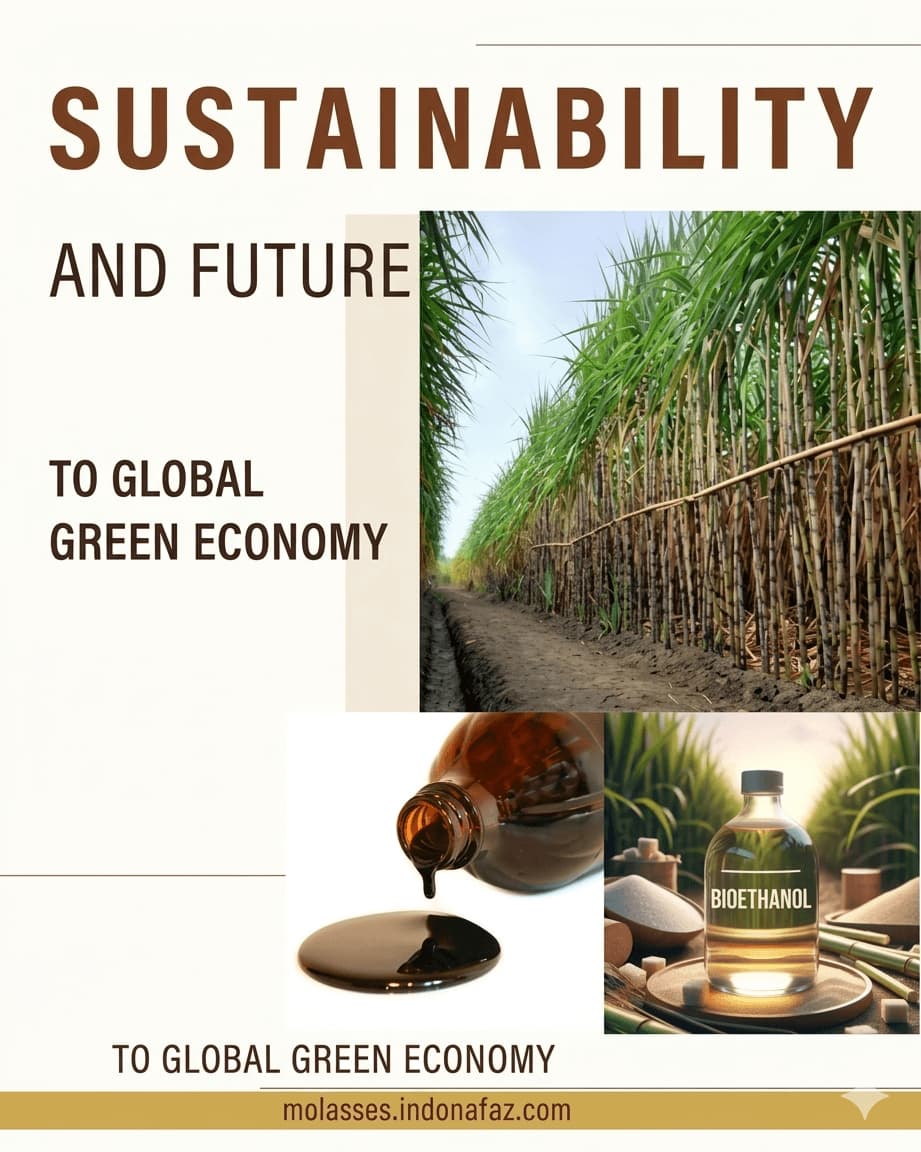
In an era where climate change is a primary global concern, sustainability is no longer just an option but a necessity. Every global supply chain is now required to be not only efficient but also environmentally responsible. This is where Indonesian molasses plays a strategic role, not just as an economic commodity, but as part of the solution for a greener future.
Molasses: A By-Product with High Environmental Value
One of the most important aspects of sustainability is the concept of a circular economy, an industrial system that minimizes waste and maximizes resource utilization. Molasses is a perfect example of this principle in action.
- Reducing Industrial Waste:
In the process of refining sugarcane into white crystal sugar, molasses is produced as a by-product. Without further utilization, this thick liquid could become industrial waste requiring costly treatment. However, by transforming it into a product of high economic value, the Indonesian sugar industry actively reduces the volume of waste it generates. Molasses, once a "disposal" item, is now a new source of revenue. - Supporting the Circular Economy:
A circular economy aims to keep products, materials, and resources in use for as long as possible by cycling them back into production. Indonesian molasses does exactly that:- As a New Raw Material: Molasses is not discarded; instead, it becomes a valuable input for other industries like bioethanol, animal feed, and fermentation. This creates a new life cycle for a material that was originally a "residue."
- Resource Efficiency: By utilizing the entire sugarcane stalk (the stem for sugar, and the molasses for derivatives), the Indonesian sugar industry achieves high resource efficiency, aligning perfectly with sustainability principles.
- Adding Value to Agriculture:
The utilization of molasses provides a direct economic impact on the agricultural sector. Sugarcane farmers and sugar mills are no longer dependent solely on income from sugar. With an export market for molasses, they gain a significant additional source of income (added value) . This strengthens economic resilience at the grassroots level and encourages more sustainable farming practices.
Vast Opportunities in the Era of Green Industry and Bioenergy
Global awareness of environmentally friendly products is steadily increasing. Consumers and industries in developed countries now prefer raw materials that come from sustainable sources. This opens up tremendous opportunities for Indonesian molasses.
- A Key Driver of Bioenergy (Bioethanol) :
As previously discussed, molasses is the primary raw material for bioethanol. Bioethanol from sugarcane is globally recognized as a biofuel capable of significantly reducing greenhouse gas emissions (by up to 90% compared to fossil gasoline). In other words, Indonesian molasses is fuel for the global energy transition. Every ton of molasses exported and processed into ethanol directly contributes to reducing the world's carbon emissions. - A Sustainable Source for Alternative Protein:
In the animal feed industry, molasses helps create more efficient feed. By enhancing palatability and digestive efficiency, molasses indirectly helps reduce the carbon footprint of livestock farming (as animals reach slaughter weight faster with less feed). - An Eco-Friendly Input for the Fermentation Industry:
Many everyday consumer products—from baker's yeast and MSG to citric acid—are produced from the fermentation of molasses. By choosing Indonesian molasses, these industries can claim that their raw materials come from a responsible source that supports circular economy practices.
Indonesia's Commitment to a Sustainable Future
As a nation, Indonesia has a strong commitment to sustainable development. This is reflected in the management of its sugar and derivative industries:
- Sustainable Agricultural Practices: There are ongoing efforts to implement environmentally friendly sugarcane cultivation practices, such as efficient water management and reduced use of chemical fertilizers.
- Energy Efficiency in Mills: Many modern sugar mills use sugarcane bagasse (the fibrous residue) as a source of energy to run the plant, further reducing the production's carbon footprint.
- Transparency and Traceability: Indonesian exporters are increasingly transparent about the origin of their products, allowing buyers to conduct due diligence on the sustainability aspects of their supply chain.
Indonesian molasses is more than just an ordinary export commodity. It is a representation of a commitment to sustainability, resource efficiency, and the future of green energy. By purchasing Indonesian molasses, you are not only getting a high-quality product but also becoming part of the global solution to tackle industrial waste and support the transition towards a low-carbon economy.
With Indonesian Molasses, realize a greener and more sustainable future. Contact us to become a partner in this important journey!